
The short answer: a sponsorship is worth far more online than it is in person. The banner at the event reaches a few hundred people one time. A news article, an interview shout-out or a link from the event's website reaches buyers, search engines and AI tools for years. The trick is to put those online mentions in the sponsorship contract before you hand over a check.
We worked through exactly this with a client recently. They were sponsoring a musician's tour with real money from their marketing budget. The first plan was the usual one: logo on the stage banner, logo on the merch, good feelings all around. We helped them flip it to a digital-first plan instead, so the sponsorship would keep paying them back long after the last show. Here's that playbook, step by step, so you can use it for your next sponsorship too.
Why the logo on the banner isn't the point
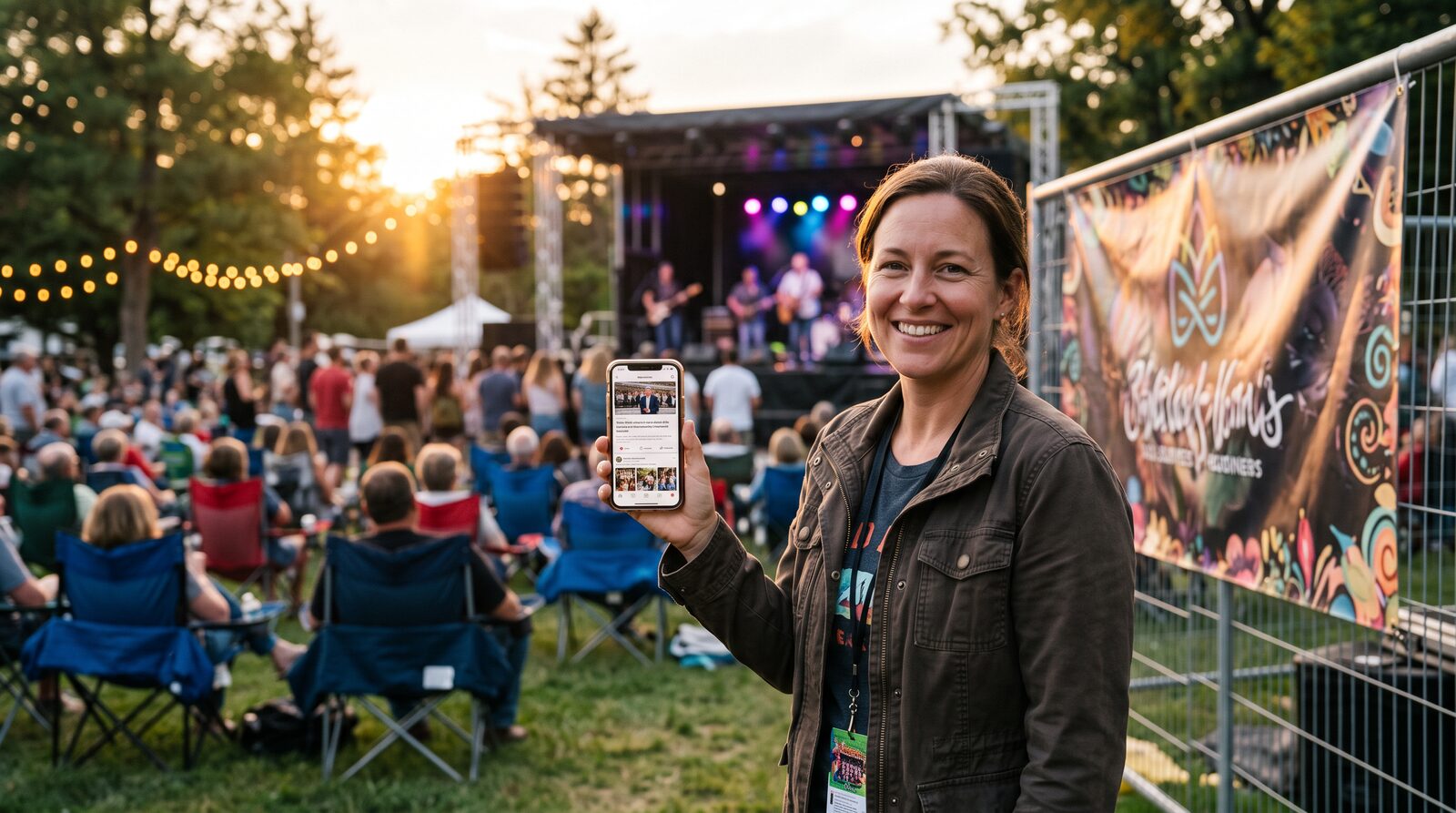
Think about who actually sees your banner. At a local concert, a 5K, a charity golf day or a youth sports season, that's often somewhere between a few hundred and a couple thousand people. Most of them are there for the event, not for you. They'll see your logo for a few seconds, and most won't remember it by the drive home.
Now think about everything that happens online around that same event. The local paper writes a preview. A radio station does an interview. The venue lists the event on its website. The organizer posts about it on social media. Every one of those is a chance for your business to be named, and linked, by a trusted source.
The crowd sees your banner once. A link from a news site or venue page keeps working every day: for buyers who search for you, for Google, and for AI tools deciding which businesses to recommend.
What online mentions actually do for your business
When a respected website links to yours, search engines treat it like a vote of confidence. Google explains that it finds and understands pages by following links across the web, and links from relevant local sites like newspapers, radio stations and venues are some of the hardest for a small business to earn any other way.
There's a newer reason too. AI tools like ChatGPT, Gemini and Google's AI answers learn about businesses from what other websites say about them. When trusted sources mention you by name, you're more likely to show up when someone asks an AI for a recommendation. We call that AI search visibility, and a well-planned sponsorship is one of the easiest ways to build it.
The 5-step sponsorship playbook we use with clients
1. Decide what you want before you sign
Most sponsorships go wrong right here. The business agrees on a dollar amount and a logo placement, and nobody talks about online results. Before you commit, write down what success looks like. For our client it was simple: third-party mentions of their business, with links back to their website, in as many places as possible. Brand recognition, not a direct sales bump.
2. Put the online mentions in the contract
The contract is your lever. If it isn't written down, it usually doesn't happen. Ask for language that requires your business name and website link in:
- Press releases and media announcements
- Radio, podcast and press interviews where the sponsorship comes up
- The event or venue website listing
- The organizer's social media posts about the event
Keep the in-person basics too: your logo on signage and merchandise, plus a QR code that sends people straight to a page on your website. Just treat those as the bonus, not the main event.
3. Let them run the social posts
You don't need to become a social media manager for someone else's event. The people you sponsor already have the audience and know what that audience likes. So make it part of the deal: you provide the content, they post it. A short interview video, a behind-the-scenes photo or a thank-you message all work well. Your business lands in front of their followers, and your team doesn't lose a week to it.
4. Start with a wish list and negotiate down
We had our client draft the first version of the agreement with every online deliverable they could think of. That full list becomes the starting point for the conversation. Some items will get trimmed, and that's fine. You'll still walk away with far more than if you'd only asked for the banner. (AI is great for this step. It can draft a thorough first version of the agreement in minutes for your attorney to review. Our guide on using AI to keep your plans on track shows how we put it to work on everyday business tasks.)
5. Track what you got
Set your targets before the event and check them afterward. Count the mentions and links, track visits from the QR code and from each link, and watch whether more people search for your business by name. That tells you whether to renew, and what to ask for next time.
Make sure your website is ready for the attention
All those links and QR scans send people to your website. If the page they land on is out of date or slow, the sponsorship's best moment is wasted. Before the event, check that your site clearly says what you do and how to reach you, and give the QR code its own simple landing page. If you're not sure who controls your site, start with how to take back control of your website. And if a website chat agent answers questions for you, make sure visitors get handed to a real person fast. Here's how to hand off a lead without losing it.
Planning a sponsorship, event or partnership? Reel Axis helps small businesses turn them into lasting online visibility: the right asks in the agreement, content that's ready to post, and a website built to catch the traffic. Talk to our team.
Frequently Asked Questions
Is sponsoring a local event worth it for a small business?
It can be, if you plan for the online value and not just the in-person crowd. A crowd of a few hundred people sees your banner once. A press article, an interview mention or a link from the event's website keeps sending people and search engines to your business for years. Sponsorships pay off when the contract guarantees those digital mentions.
What should I ask for in a sponsorship agreement?
Ask for a mention of your business name with a link to your website in every piece of online promotion: press releases, interviews, the event or venue website and social posts. Also ask for your logo on signage and merchandise, a QR code to your site, and a commitment that the organizer posts content you provide. Start with a full wish list and negotiate down.
How does a sponsorship help SEO?
Every time a news site, radio station, venue or partner links to your website, search engines see it as a vote of trust. Those links from real, local and relevant websites are some of the hardest to earn any other way. They also help AI tools like ChatGPT and Google's AI answers recognize your business as credible, because those tools learn from the same websites.
Who should handle social media for a sponsorship?
Usually the people you're sponsoring. They already have the audience and know what works with it. Your job is to hand them good content, like a short video or a photo with a caption, and make posting it part of the agreement. That puts your business in front of their followers without adding work to your week.
How do I measure if a sponsorship worked?
Count the online mentions and links you received, track visits to your website from those links and from your QR code, and watch for new searches for your business name. Set those targets before you sign so you can compare results against what you paid.
Related Reading
- AI Search Visibility for B2B Service Firms: how to get found when buyers ask AI for recommendations
- Your Website Is Now the Brain Behind Your Marketing: why what your site says matters more than ever
- How to Keep AI Content On-Brand: make every post and graphic look like you
- Does One Person Hold the Keys to Your Website?: get control before the traffic arrives